Aspire
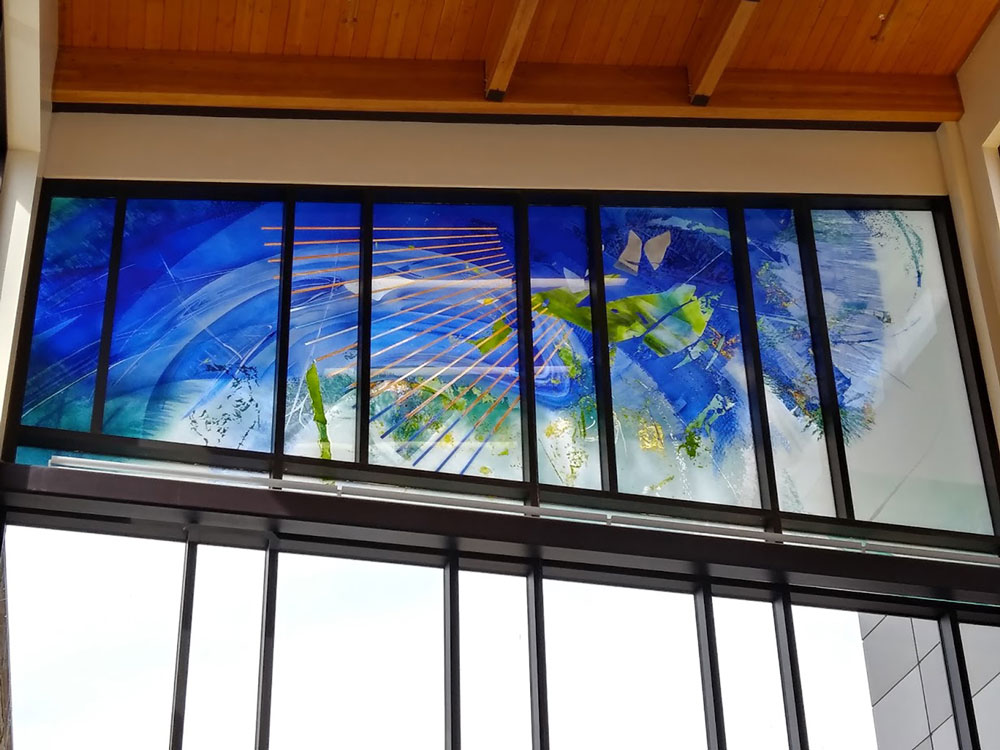
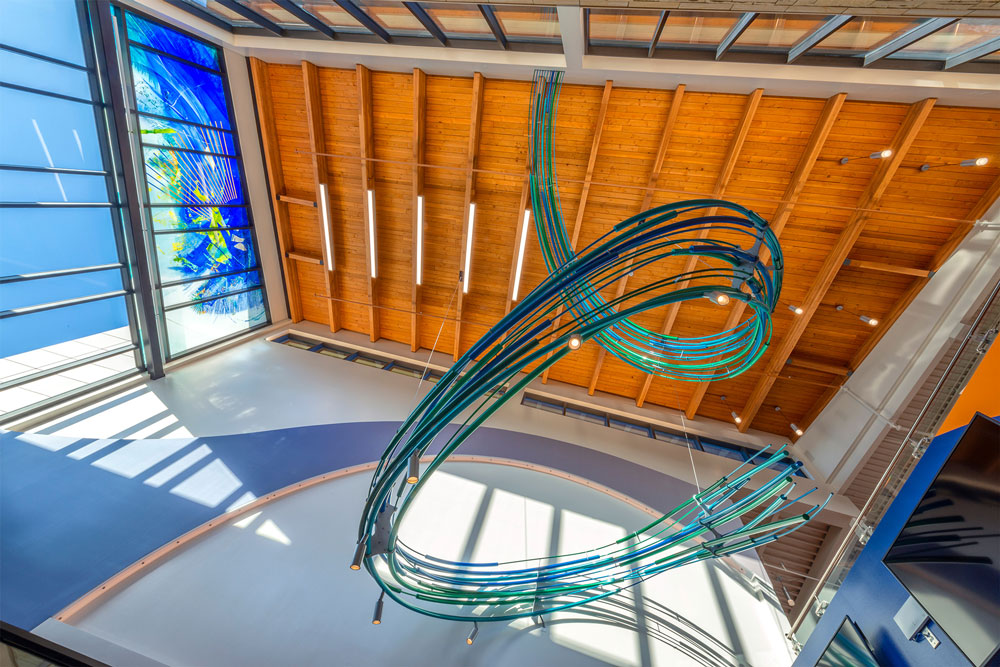
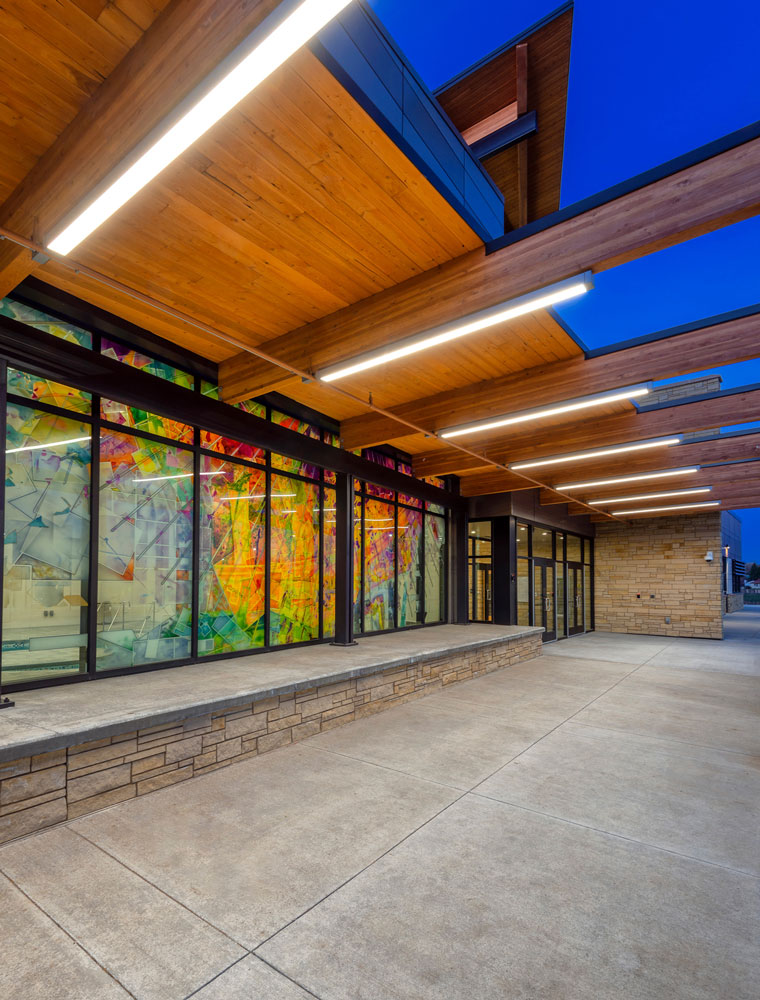
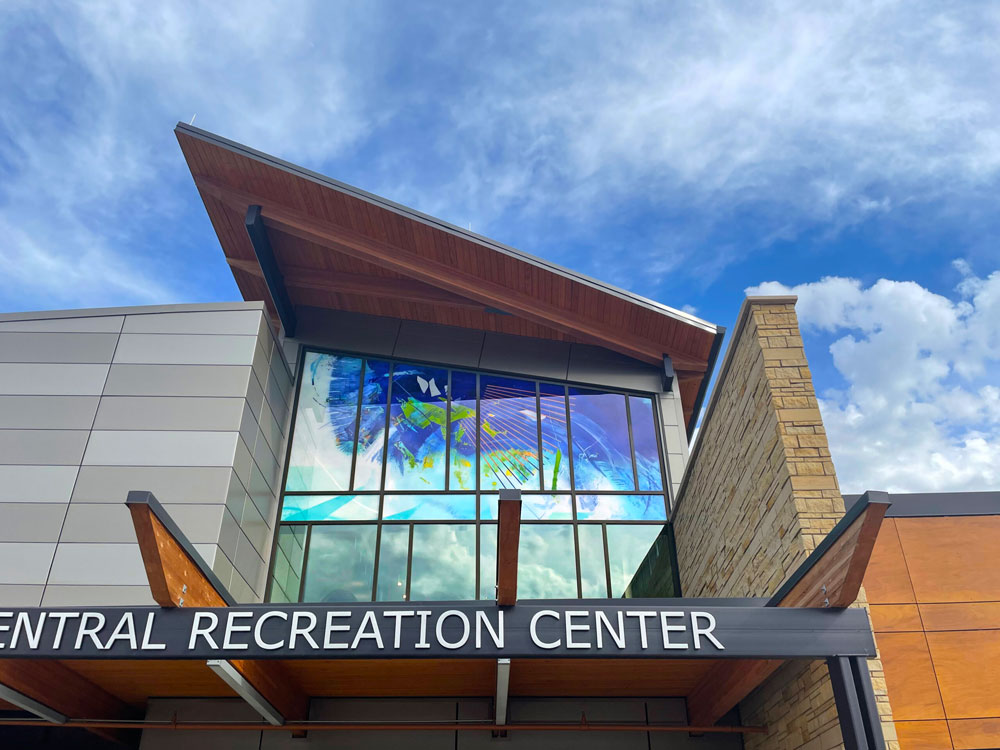
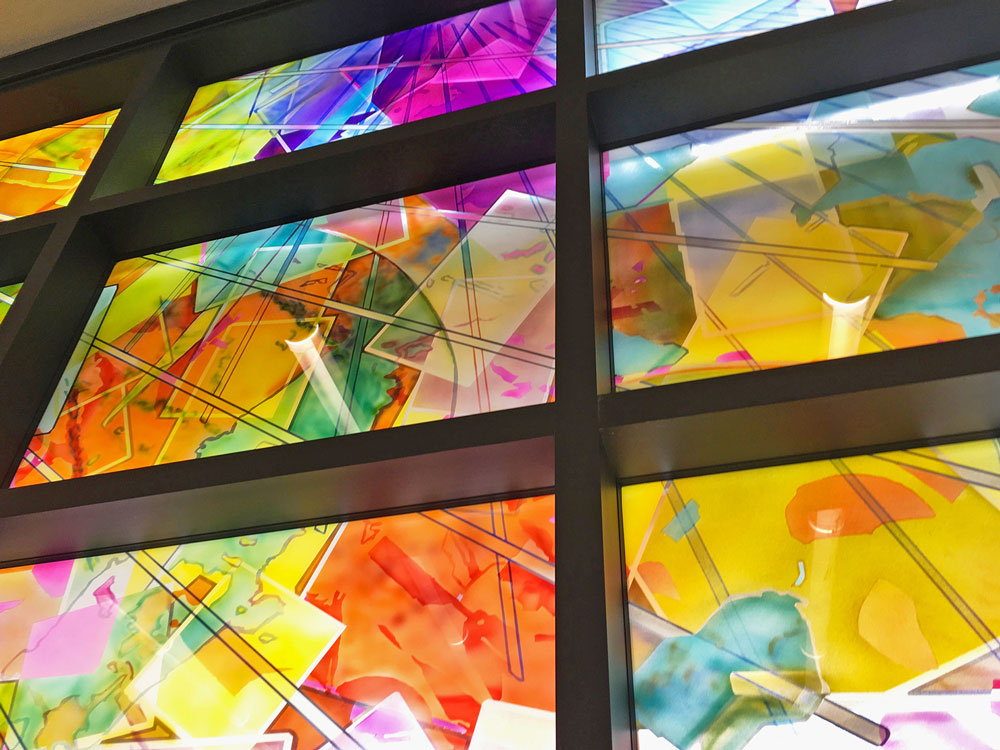
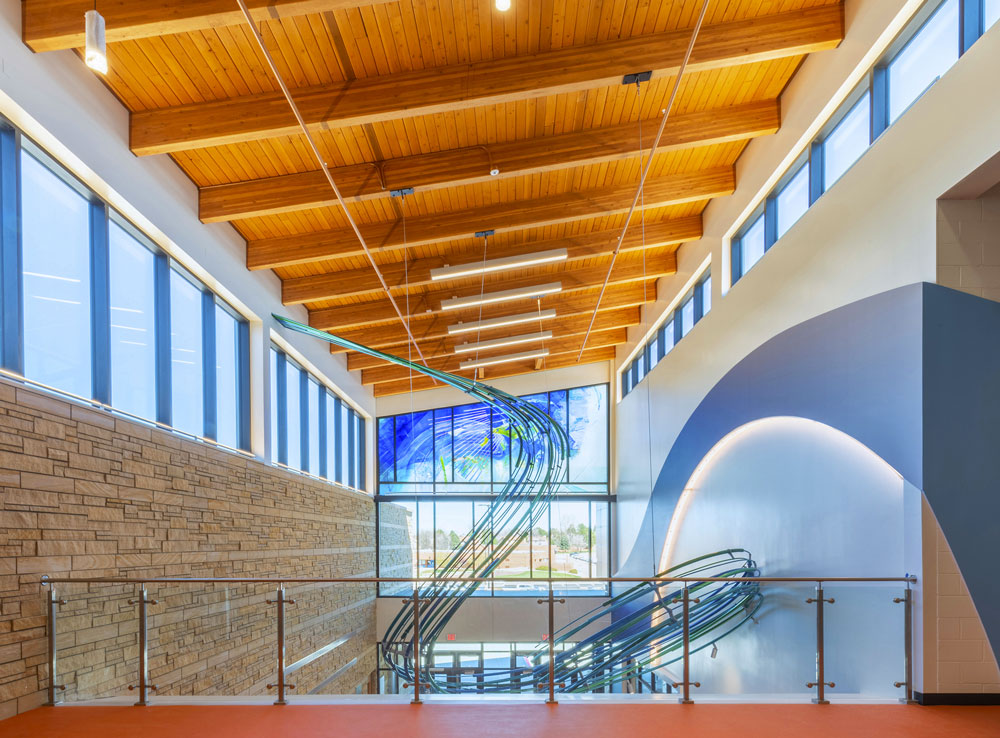
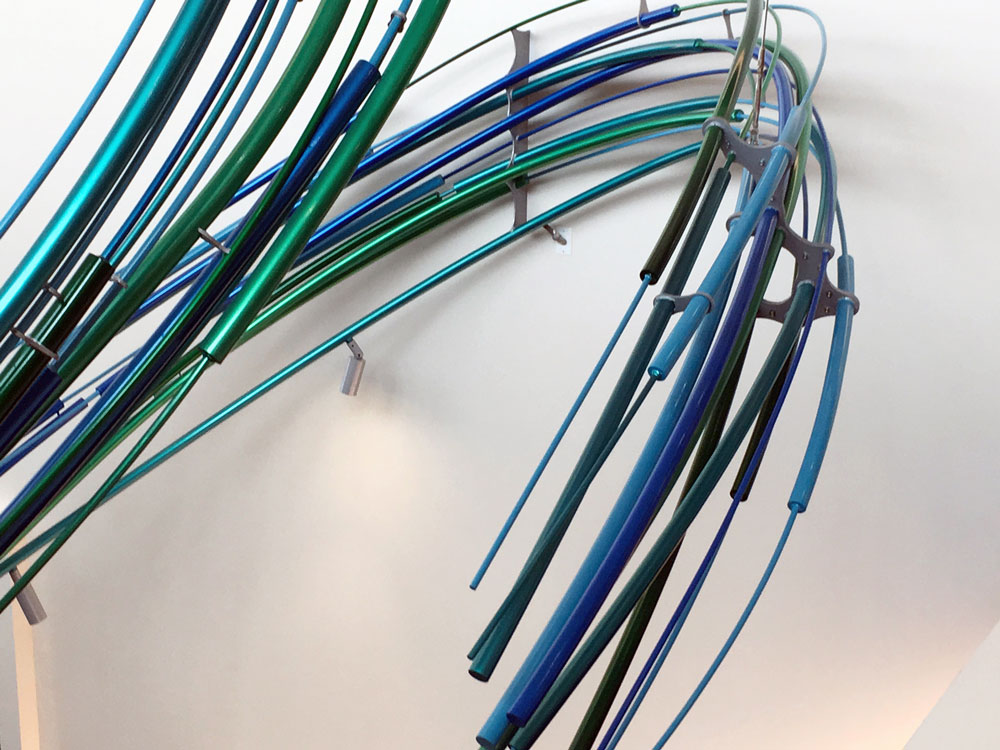
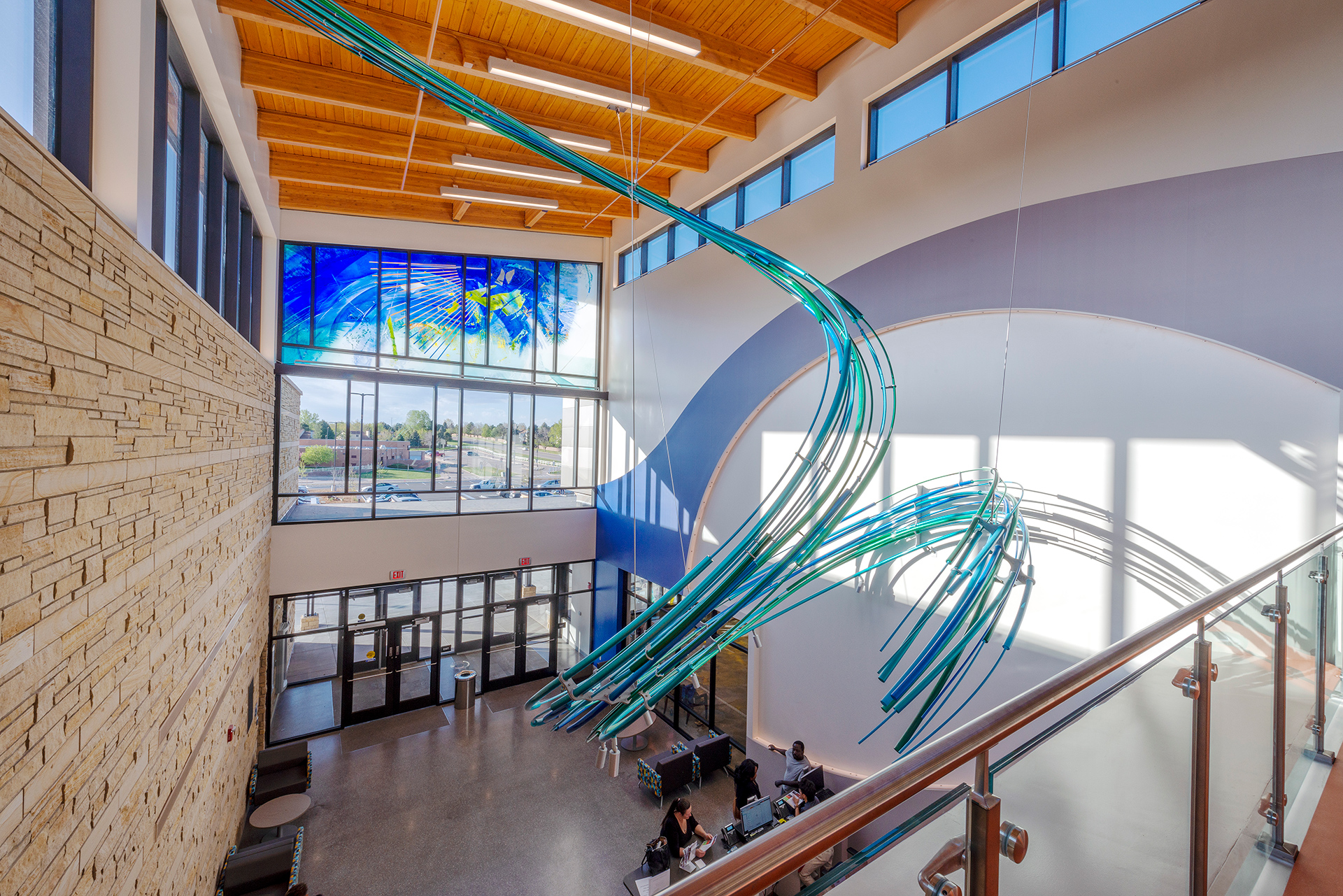
Aspire is an early-integration public art project created by artists David Griggs and Scott Parsons for the Aurora Central Recreation Center — Aurora’s largest public art project to date. Working in close partnership with architects Populous, the City of Aurora, and general contractor Adolfson & Peterson Construction, Griggs and Parsons identified four art locations as part of the early-integration process: three large-scale architectural art glass works installed along the exterior of the rec center from north to south, totaling 57 panels and 920 square feet, and a dynamic suspended metal sculpture in the two-story atrium entrance.
Goals
This project is meant to inspire wellness and wholeness — how the body and physical life become a source of power and inspiration available to everyone. The imagery in glass and the shaped movements of the atrium sculpture record the rhythmic beauty and kinesthetic energy of the human body in motion.
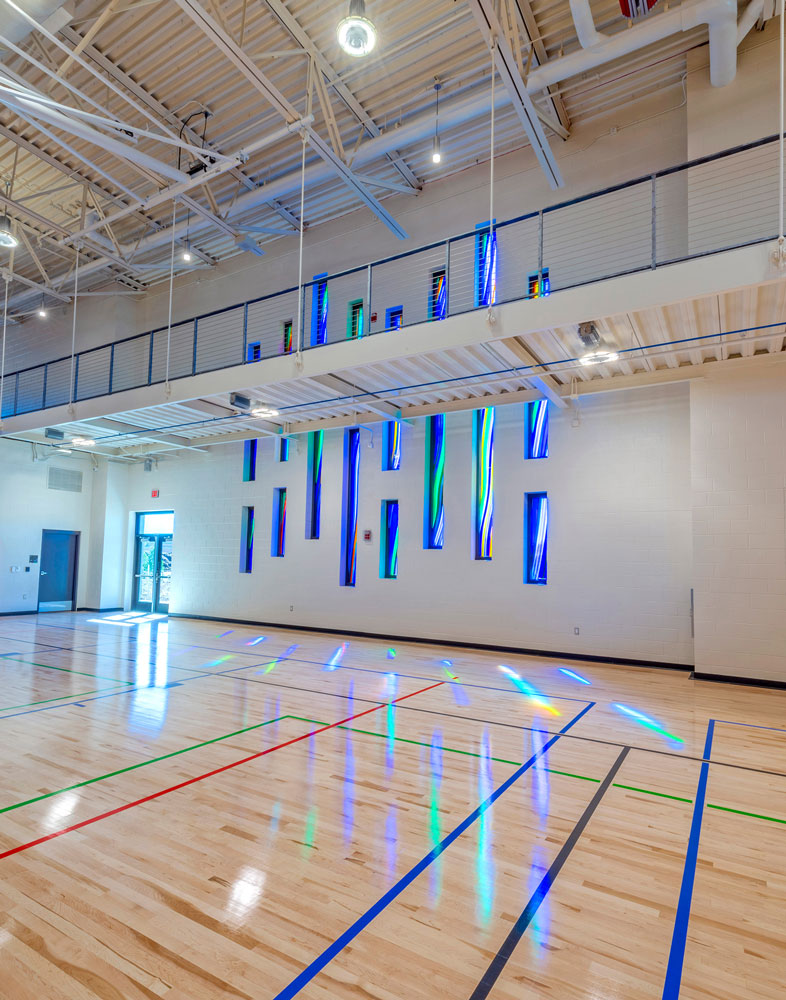
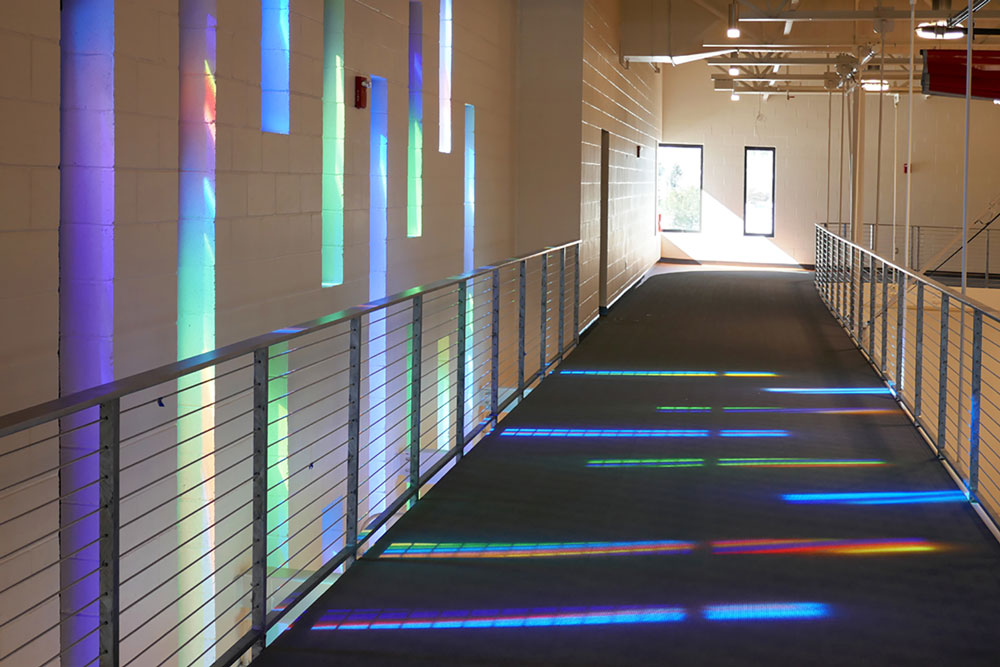
All four locations are visible from the exterior of the rec center by day and night, serving as a luminous and warm beacon inviting the neighborhood and community of Aurora inside. The colored light falling across the running track and gym floor responds to the seasonal movements of the sun and the repetition of exercise throughout the year, creating a sanctuary for recreation. The natatorium windows play with the reflection and refraction of color on water.
The intent is to engage the users of this facility for the long term — to give pause and honor multiple viewpoints, in a place where families will return again and again and watch their children grow. And by extension, to feel part of a community, a humanity, a wholeness: a way of life that is connected.
Process
During the design phase, modifications were integrated directly into the building’s architecture to best site the artwork. The running track wall, for example, was extended outward to allow for a vertical gesture of colored art glass rising through both floors of the gymnasium.
For the glass works, Griggs and Parsons partnered with Derix Glasstudios in Taunusstein, Germany. The designs were scaled to full 100% drawings and rendered by hand using airbrush, vitreous enamel paint, and acid-etching through multiple kiln firings. The insulated glass units were then fabricated in Denver and installed on site. The atrium sculpture was developed and fabricated in close collaboration with local company Demiurge, in painted tubular steel.